In recent years, the table grape market has changed radically. It is no longer enough to produce a lot or to have a grape that looks good in the vineyard. Today, grapes are evaluated at the shelf, and those who do not understand this lose money, markets, and credibility.
1. Food Safety: The First and Toughest Filter
A grape that can be marketed in the EU must have a maximum of 5 pesticide residues, all from approved and permitted substances in the European Union, below MRL limits. Explanations do not matter, weather conditions do not matter, good intentions do not matter. The laboratory analysis decides everything. A poor result can close a market not just for one season, but for years.
2. Caliber: The Market Demands 18+
The second major criterion is caliber. The market clearly demands 18+. Below this threshold, grapes become difficult to sell, regardless of variety or taste. Small caliber is almost always the result of excessive crop load, uncontrolled irrigation, or unbalanced nutrition. We produce a lot, but poorly, and the market penalizes exactly this.
3. The Cluster: Airy, Healthy, with Green Rachis
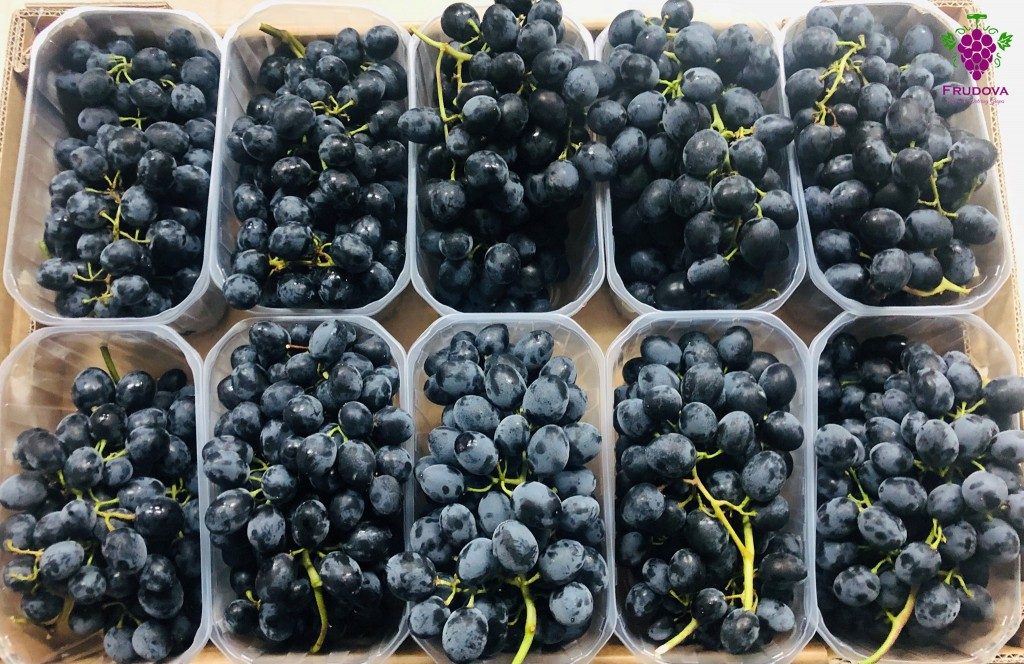
Another essential element is the cluster. A commercial grape does not have a compact and "forced" cluster. It has an airy, healthy cluster with green rachis that stays green for a long time. Dry rachis is the first sign of a tired product, even if the berries seem fine. In retail, green rachis means freshness; brown rachis means returns.
4. Taste: Brix 18+ Is Now a Baseline, Not a Competitive Advantage
Regarding taste, it must be said very clearly: minimum Brix 18+ is no longer a competitive advantage, it is a baseline condition. Grapes harvested too early may look good at delivery, but they will not be purchased again. Without taste, there is no repeat purchase, and without repeat purchase, there is no stable market.
5. Shelf Life: The Most Important and Most Ignored Criterion
The most important criterion today, and the most ignored by producers, is shelf life. A grape that can be marketed must withstand a minimum of 7 days on the shelf, under ambient temperature conditions, without mold, without rot, and without visible quality loss. The retailer does not sell grapes in 24 hours. If the product does not last, it is thrown away. And a discarded product is not ordered again.
6. How Shelf Life Is Built
Shelf life is not "fixed" with chemistry at the end. It is the result of:
- Correct crop load on the plant
- Complete maturation
- Controlled irrigation
- Correct and timely treatments
- Responsible harvesting
Conclusion
The conclusion is simple and must be stated directly: we do not produce for the vineyard, we do not produce for the warehouse, we produce for the shelf. Those who produce grapes that last on the shelf will have a market. Those who produce grapes that only look good at harvest will have returns, losses, and frustrations. The market no longer forgives. But it is fair to those who adapt.
To reduce non-compliance risks at export, also read about the PesticideUE.md pesticide verification tool.
Interested in our premium grapes?
Contact us to discuss partnership opportunities.
Contact on WhatsApp