
European retailers sourcing table grapes face a critical choice between Moldova and Turkey — two of the continent's key suppliers. This comparison examines quality, logistics, certifications, and pricing to help buyers make informed decisions.
Climate and Terroir: The Growing Conditions
Moldova's continental climate, with hot summers and cold winters, creates a natural dormancy cycle that strengthens grape vines. The country benefits from over 3,000 hours of annual sunshine and nutrient-rich chernozem soil — conditions that produce grapes with exceptional sugar content (18-22 Brix) and firm texture.
Turkey offers a Mediterranean climate in its Aegean and Mediterranean regions, producing large volumes of grapes. However, the warmer conditions can result in softer berries with shorter shelf life. Turkish grapes tend to mature faster, which can compromise firmness during long-distance transport.
Quality and Shelf Life Comparison
- Moldova grapes: 14-21 days shelf life at 0-2°C, firm texture maintained throughout transport
- Turkey grapes: 10-14 days average shelf life, softer texture due to warmer growing conditions
- Moldova's cold nights during ripening concentrate sugars while maintaining berry firmness
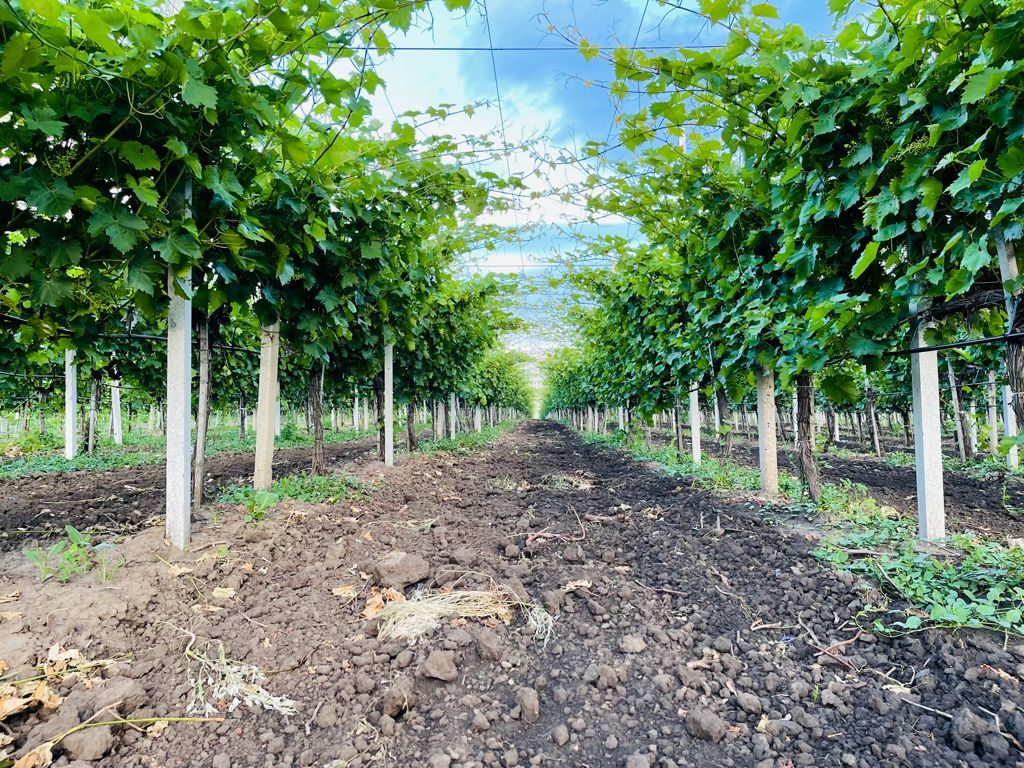
- Pergola vineyard systems in Moldova optimize airflow and reduce disease pressure
Certifications and Food Safety
Moldova's leading producers like Frudova hold GlobalG.A.P. certification (GGN: 4063061129826) and GRASP standards, meeting the strictest EU requirements for food safety and ethical labor practices. Residue testing is performed on every batch, ensuring compliance with EU Maximum Residue Limits (MRLs).
While Turkey also has GlobalG.A.P. certified producers, the certification coverage is less uniform across the fragmented supply chain. EU border rejections for pesticide residues have historically been more frequent for Turkish produce compared to Moldovan exports.
Logistics and Transit Times
- Moldova to Germany: 2-3 days by refrigerated truck via Romania and Hungary
- Moldova to Poland: 1-2 days direct route through Ukraine or Romania
- Turkey to Germany: 4-5 days by truck, or 7-10 days by sea freight
- Moldova's proximity to EU markets reduces cold chain risks and transport costs
Pricing and Value Proposition
Moldova offers competitive pricing compared to Turkey, with the added advantage of shorter transit times reducing spoilage costs. The total cost of ownership — including transport, wastage, and returns — often favors Moldovan grapes for Central and Eastern European markets.
Turkish grapes may have lower farm-gate prices but higher logistics costs for Northern European destinations. When factoring shelf life losses and potential compliance issues, Moldova consistently delivers better value per kilogram at retail.
Seasonal Availability
Moldova's harvest season runs from August through October, with cold-storage grapes available through February. This overlaps with Turkey's main season (July-November), but Moldova's controlled atmosphere storage extends availability during the premium winter window when competition is limited.
Conclusion: Why Moldova Wins for EU Retail
For European retailers prioritizing consistent quality, food safety compliance, and supply chain efficiency, Moldova offers a compelling advantage over Turkey. Shorter logistics, stricter certification adherence, superior shelf life, and competitive total costs make Moldovan grapes — particularly from certified suppliers like Frudova — the smart choice for building reliable fresh produce partnerships.
Geïnteresseerd in onze premium druiven?
Neem contact met ons op om partnerschapsmogelijkheden te bespreken.
Contact via WhatsApp