
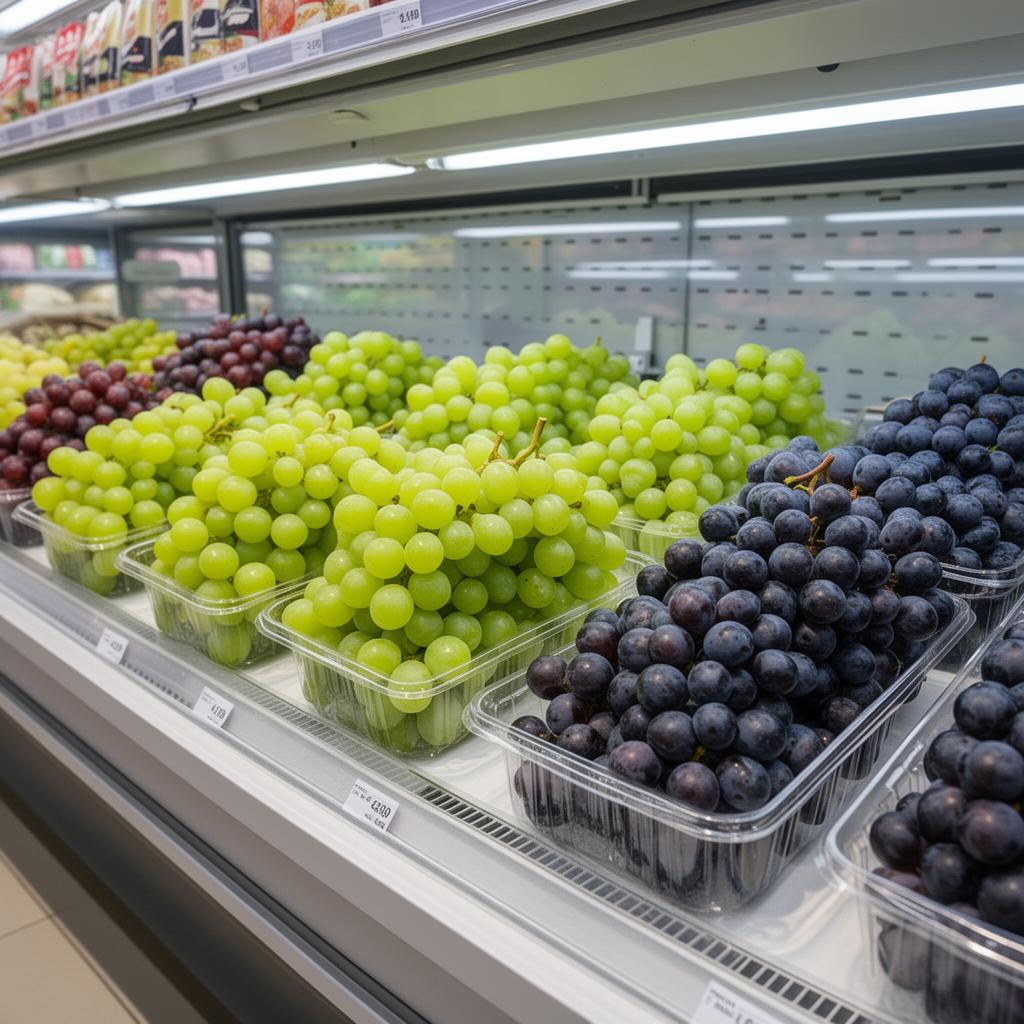
In Moldova, producers work hard, invest in plantations, fertilizers, packaging, labor, and logistics. But very few analyze an element that actually decides everything in the market: shelf life. This is the period during which grapes remain firm, fresh, and sellable at the market or on store shelves. If this period is short, all previous efforts become useless. The grape may look good in the vineyard, but if it does not last 10–20 days after harvest, it will be discarded by buyers, and trust in the producer and in the "Moldova" origin drops instantly. The reality of recent years shows clearly: we are not losing the market because of competition, we are losing it because of inconsistent quality and short shelf life of our grapes.
1. Excessive Irrigation in the Final Period Compromises Grape Structure
Many producers continue heavy irrigation almost until harvest. The berries become large, but excess water prevents the formation of dense pulp. The result is a grape with:
- Little and soft pulp
- Low internal pressure
- High sensitivity to handling
2. Overloading Plants Reduces Quality of Each Cluster
We want high production, but the plant has a physiological limit. When we leave 20–40% more clusters than the vine can support, each berry receives less nutrition. The consequences:
- Thin skin
- Weak pulp
- Insufficient dry matter accumulation
- Reduced transport resistance
3. Harvesting Before Complete Maturity and Uneven Brix
This is one of the most serious technical mistakes. Many plots have large maturation differences between rows and even between berries in the same cluster. When we harvest without selection:
- Unripe berries attract water and dehydrate rapidly
- Overripe berries ferment
- Accelerated mold appears
- The cluster becomes unstable in storage
4. The Final Effect: Buyers Discard the Product and Stop Buying
A modern consumer has alternatives from Greece, Italy, Spain, Turkey, and even Peru. If they take a Moldovan grape that softens in 48 hours even once, they discard it and avoid this product all season. The store loses, the distributor loses, and the producer loses the most. A short shelf life does not just affect one lot—it affects the entire reputation of Moldovan grapes.
5. Conclusion for Producers: Not Quantity, But Resistance Decides Profit
In the coming years, the European market becomes increasingly selective. We will not win through volume, but through stability and shelf life. Moldovan producers must understand that:
- A grape that lasts 14–20 days has value compared to one that lasts 3–5 days and cannot be sold
- Retailers prefer consistent suppliers, not occasional ones
- Real quality begins in the vineyard, not in storage
- Shelf life is the result of decisions made during the season, not luck
Conclusion
If we want secure contracts, good prices, and a stable market, we must change our mentality now. The market no longer allows us to make technical mistakes. Shelf life is the new currency of success.
Long-term quality also depends on EU MRL compliance. Verify active substances with PesticideUE.md.
Interested in our premium grapes?
Contact us to discuss partnership opportunities.
Contact on WhatsApp